
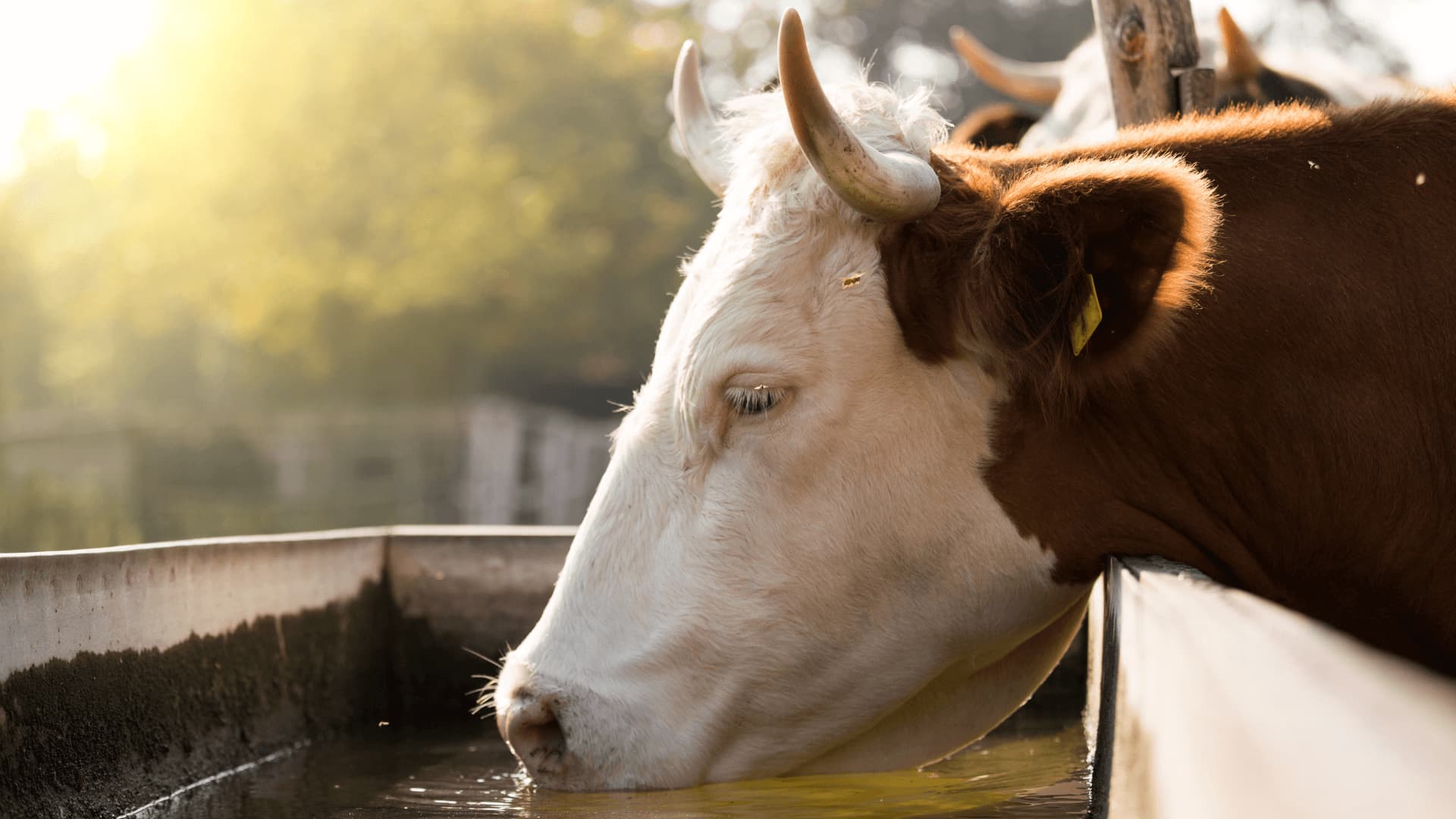
Water is a vital and strategic resource for the agriculture and livestock sector. Whether it is used to water animals, wash equipment,irrigate fields, or supply cooling systems, the quality and availability of water directly affect the productivity and profitability of a farm. Today, many farms and agricultural operations have boreholes or wells. However, this autonomy comes with technical challenges that must be overcome.
The challenges of borehole water in agricultural operations
A major economic challenge
Drilling a well is a huge source of savings compared to mains water. In a world where operating costs are rising, this water autonomy also represents a competitive advantage. However, the presence of sand, clay, silt, and numerous particles suspended in the well water can turn this necessity into an unexpected expense.
Modern agricultural equipment, which is often expensive, is very sensitive to variations in water quality. Water laden with particles causes premature wear and tear on pumps, irreparable clogging of pipes, and clogging of irrigation systems. Frequent replacement of such equipment adds to the farm’s budget and reduces the return on investment of the drilling.
Maintenance: an operational headache
Farms are under constant time pressure. Between production cycles, animal care, and daily tasks, the time spent maintaining filtration systems weighs heavily on farm logistics. Conventional cartridge filtration systems require regular replacement, often weekly or even more frequently. This activity requires both time, i.e., costs, and a permanent stock of consumables, resulting in recurring costs and restrictive logistics.
Continuity and reliability of supply
In the livestock sector, no interruption in the water supply is permitted, given the welfare of the animals and production. Indeed, water restriction will lead to a considerable drop in milk production in dairy cows. Similarly, the installation of an automatic irrigation system cannot tolerate failure during critical crop growth phases.
A faulty filtration system, even if only partially blocked, will still cause a drop in pressure or even a total stoppage of water distribution. The reliability of filtration is no longer just a requirement, but a factor in operational safety within the farm.
Health compliance in livestock farming
Health regulations applicable to livestock farming are becoming increasingly stringent, particularly with regard to the quality of drinking water. Drilled water to be filtered must be free of particles that carry pathogens or are harmful to animal health. Effective filtration is the first line of defense against biological contamination. Limited to the element to be filtered and free of bacteria and other microorganisms, it reduces the need for future treatments and guarantees clean water for livestock.
Hectron solutions for farms
In response to these multiple challenges, Hectron offers automatic filtration solutions adapted to the constraints of the agricultural world.
The AG range: performance and versatility
The automatic filters in the AG range provide a comprehensive technical solution for farms of all sizes. This product range includes four models (AG100, AG200, AG300, AG400) that can handle water flows from 12 to 340 m³/h, covering all the needs of small farms and intensive livestock farming. The system works using a cylindrical stainless steel screen through which the water is filtered. The filtration threshold can be adjusted from 1 to 500 microns depending on requirements (to remove sand, clay, and the finest suspended matter, providing excellent protection for downstream equipment).
And above all, the cleaning system is truly automatic! Hectron filters differ from cartridge filters, which require manual replacement, because of their self-cleaning operation. The washing process takes no more than a few seconds, without the need for human intervention. The washing frequency is automatically adjusted according to the water load, ensuring consistent efficiency regardless of seasonal variations in water turbidity.
A truly automatic system
The major innovation of Hectron filters lies in their autonomous cleaning system. Unlike cartridge filters, which require regular manual replacement, AG filters are self-cleaning.
Cleaning takes only a few seconds and requires no human intervention. The washing frequency automatically adapts to the water load, ensuring consistent performance regardless of seasonal variations in turbidity.
Concrete economic benefits
Investing in an Hectron automatic filtration solution therefore offers multiple savings. First, there are no consumable purchase costs, then there is the time saved on an operation that does not need to be performed (or the labor that does not need to be paid to perform it).
AG filters, with their stainless steel tanks and robust design, double their service life with no sensitive wear parts.
Finally, savings on water consumption during cleaning are another significant economic advantage. While some traditional backwashing systems use hundreds of liters of water, the Hectron suction ramp optimizes the use of rinse water.
Finally, effective protection of downstream equipment increases its longevity while reducing corrective maintenance interventions.
A solution adapted to agricultural heat pumps
While many farms have invested in groundwater heat pumps to heat livestock buildings or greenhouses, these systems, although cost-effective, have heat exchangers that are sensitive to water quality.
The AG 100 filter recommended by Hectron for this application provides effective protection with a 2-micron filtration threshold, guaranteeing the removal of even the smallest particles, sand, clay, and fine soil, which are the most problematic.
A sustainable solution for tomorrow’s agriculture
In a context where sustainable water management is becoming crucial, investing in effective automatic filtration is part of a long-term strategy. Farms that choose Hectron solutions secure their water supply while reducing their environmental impact by eliminating disposable cartridges.


