
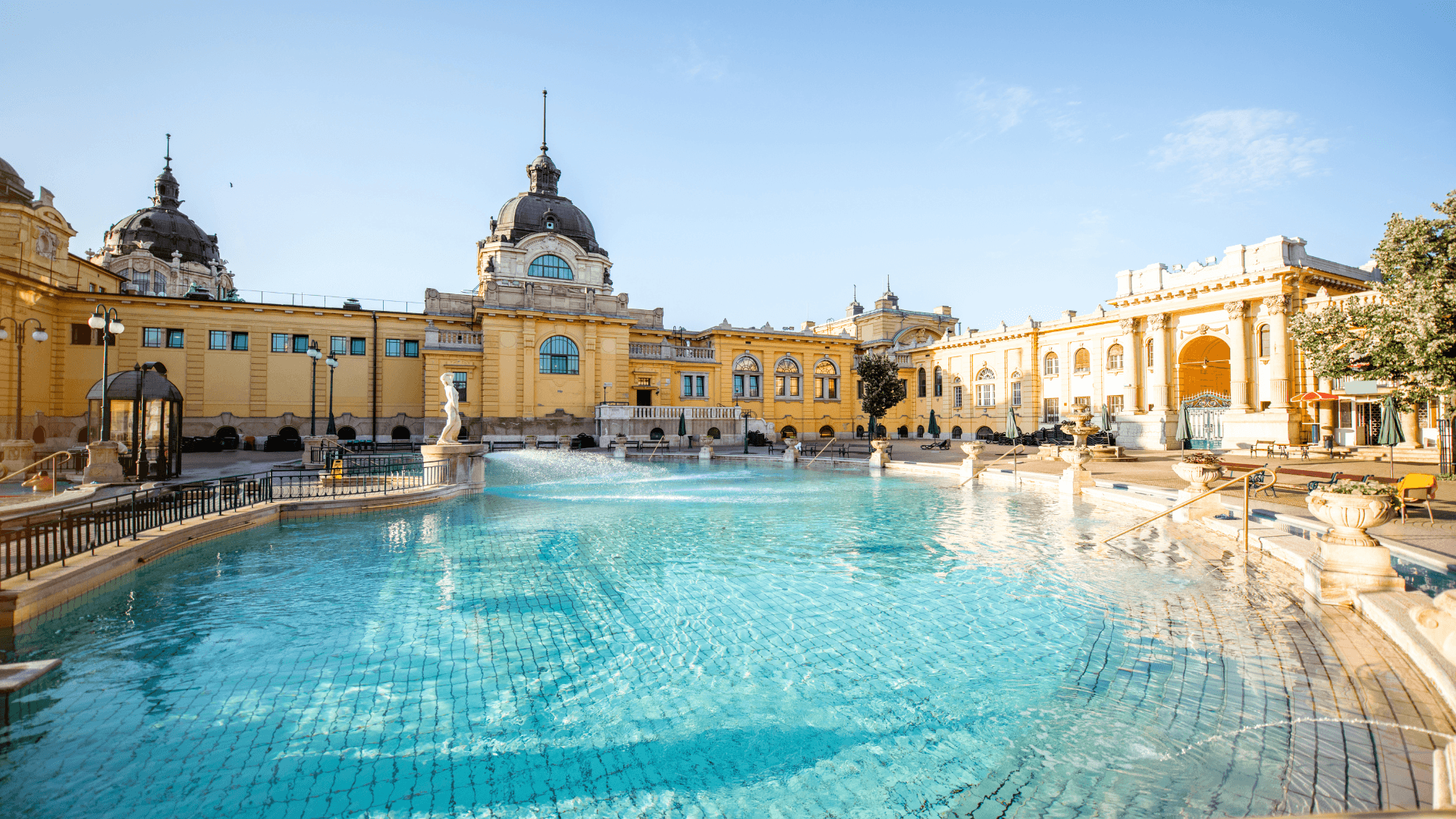
A guest who walks through the doors of a spa or thalassotherapy centre isn’t just looking for a treatment. They’re looking for an experience. And that experience often begins long before the first massage, the moment they cast their gaze (or dip their feet) into the pool. Cloudy water, slightly murky or reeking of chlorine, is a broken promise. For hoteliers and wellness professionals, water quality is not merely a technical parameter: it is a direct component of their brand image.
Water: your establishment’s silent showcase
In a 4- or 5-star hotel, a spa or a thalassotherapy centre, guests’ expectations are very high. They have paid for comfort, tranquillity and cleanliness. A swimming pool with deep blue hues, water that feels soft to the touch in the showers or whirlpool baths – all of this contributes to the sense of quality that the staff strive to create. Conversely, water laden with particles or visibly worn-out equipment can be enough to spoil the experience, and with it, online reviews.
Spa establishments face additional challenges: natural thermal waters are often rich in minerals, fine sediments, and sometimes silica or organic matter. Filtering these waters without altering their therapeutic properties, whilst ensuring they look impeccable, is a real technical challenge.
The maintenance headache
Behind the spotless pools lie technical teams that are often overwhelmed. Sand or cartridge filters, still very common in this sector, require constant attention: regular backwashing, replacement of filter media, pressure monitoring, and management of consumables. In a hotel operating year-round, every intervention represents time, labour and a cost.
What many managers discover in practice is that the real expense lies not in the purchase of the equipment but in its maintenance over the years. Cartridges pile up, sand filters become clogged, and backwashing consumes sometimes considerable volumes of water. For an establishment with several pools (indoor pool, hot tub, spa area), the bill quickly mounts up.
Added to this are the risks associated with breakdowns. A failing filtration system in the middle of the season means a closed pool, disappointed customers and a direct loss of revenue. Technical teams are then caught between the operational urgency and the need to intervene without disrupting customers
What a self-cleaning filter changes
Hectron, a French manufacturer based in Nice, has been developing automatic self-cleaning filters for over twenty years. Its technology is based on a simple yet effective principle: a very fine stainless steel screen continuously captures particles, and an internal suction system automatically removes the trapped impurities without stopping the filtration process, without human intervention, and without consumables to change.
In practical terms, for a spa or hotel swimming pool, this means several things. Firstly, filtration down to 2 microns is achieved, a much finer level than that of a conventional sand filter. At this level, the water becomes clearer and more transparent: guests can see it and feel the difference. Secondly, the absence of cartridges or filter media requiring replacement eliminates a whole category of recurring costs. Technical teams regain time for other priorities.
Water consumption during backwashing is also significantly reduced: less than 1% of the filtered flow rate, compared to 2–5% for a sand filter undergoing backwashing. For an establishment concerned about its environmental footprint and water bill, this is a compelling argument.
Solutions tailored to every configuration
The Hectron range covers a wide variety of flow rates, from a few m³/h for a small spa area up to several hundred m³/h for large communal facilities. The filters in the AG range, made entirely of stainless steel, are suitable for both fresh water and mineral-rich water such as thermal water. They are triggered automatically: the pressure difference between the inlet and outlet controls the cleaning cycle, without the need for any manual programming.
For spas and thalassotherapy centres using seawater or reconstituted seawater, Hectron also offers specialised filters, designed to resist corrosion and maintain fine filtration in this demanding environment.
The compact footprint of this equipment is another significant advantage in hotel plant rooms, which are often designed to the absolute minimum. Replacing a bulky sand filter with a compact Hectron filter frees up space and simplifies access for maintenance checks.
An investment that pays for itself
Self-cleaning technology represents a higher initial investment than a conventional filter. However, when you factor in savings on consumables, water savings, reduced maintenance time and the elimination of the risk of malfunction, the return on investment is generally between two and four years, depending on the size of the installation.
Beyond the financial calculation, there is something harder to quantify but just as real: peace of mind. Knowing that the pools are filtered continuously, without a team having to intervene every other day, provides a sense of operational peace of mind that facility managers quickly come to appreciate.


