
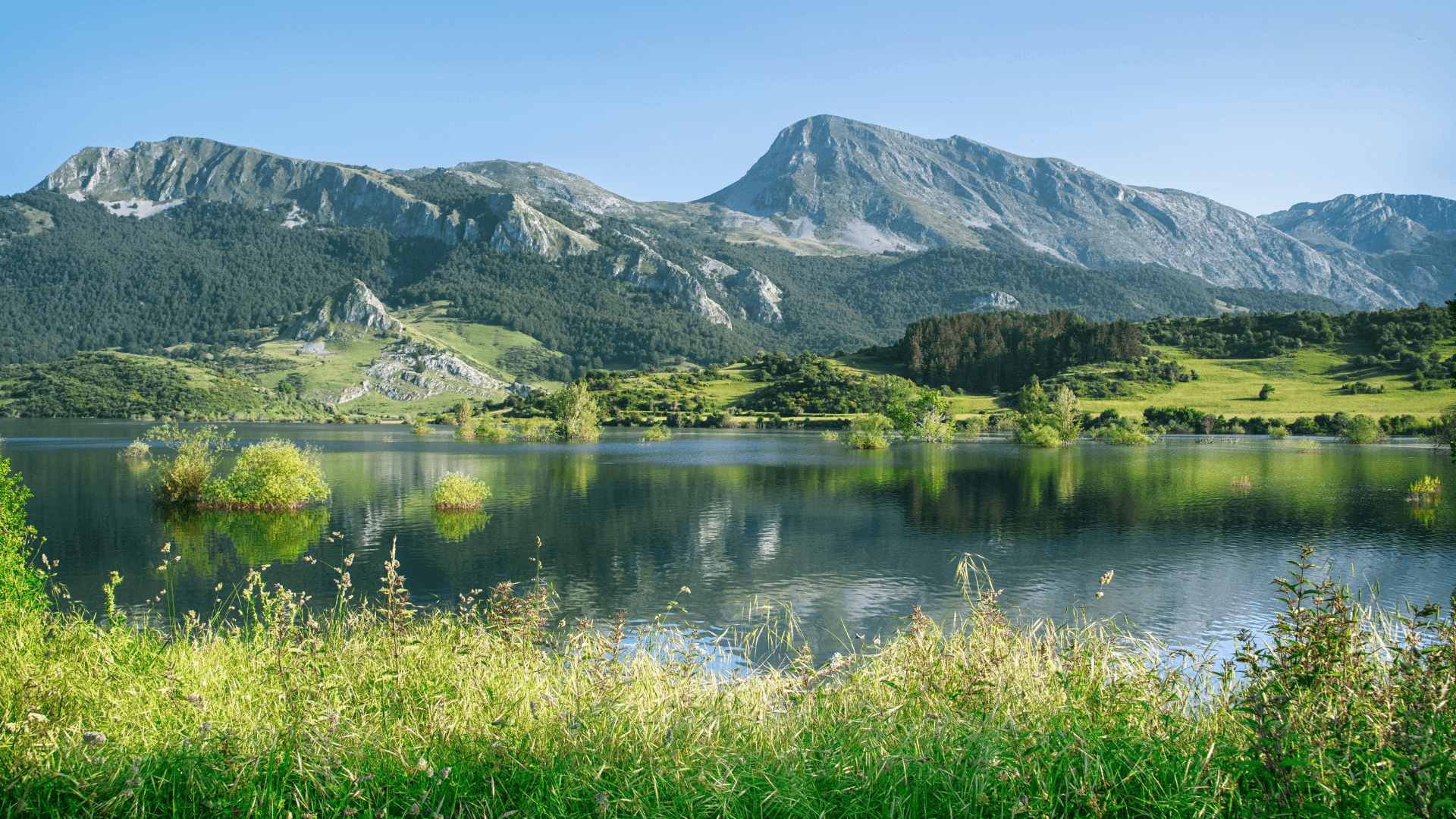
A lake appears calm on the surface. A river seems to flow steadily. Yet, behind this apparent stability, water quality changes constantly with the seasons, and sometimes radically. For any facility that draws water from these natural sources – be it a factory, a hydroelectric power station, an irrigation network or a swimming area – these variations present a real technical challenge. Here is what you need to know, and how to address them in practice.
The impact of the seasons
Spring: the return of high-sediment flows
With the snowmelt and the first heavy rains, spring is often the most challenging season for filtration systems. Flow rates increase, riverbanks erode, and watercourses carry significant quantities of silt, clay and decomposing organic matter. Turbidity can reach very high levels within a matter of hours, particularly during floods.
Summer: Algae and organic matter
In summer, the dynamics change. The heat encourages the growth of algae and cyanobacteria in lakes and shallow reservoirs. These microorganisms produce mucilage and biofilms that quickly clog conventional filters. Added to this are lower water levels, which further concentrate pollutants and suspended particles. Waters used for bathing are particularly affected: inadequate filtration can become a health hazard.
Autumn: leaves and organic matter
Autumn brings with it a wealth of decomposing plant matter: leaves, organic debris and tannins. These elements colour the water and fill it with fine particles, which often cause severe clogging. Filtration systems designed solely for mineral particles are caught off guard by these light organic particles, which slip through the mesh of a sieve in a different way.
Winter: Turbidity and Cold Temperatures
Winter may seem less challenging, but cold rainfall and seasonal flooding can also generate significant spikes in turbidity. Low temperatures slow down biological degradation processes, leaving more suspended solids in the water.
For installations that require continuous operation, even a few hours of filtration downtime can have serious consequences for downstream equipment.
Solutions That Adapt as Well as Filter
Faced with these seasonal fluctuations, the real question is not only, “What filtration level should be selected?” but rather, “How can a system remain efficient when the water load changes suddenly and dramatically?”
The Limitations of Passive Filters
Cartridge and sand filters perform well under stable conditions. However, when a flood event occurs, they can become clogged within hours and require manual intervention.
This was precisely the challenge encountered by Suez at a pumping station on the Seine River in Croissy-sur-Seine, France. The existing 50-, 20-, and 10-micron cartridge filters required frequent replacement. A single Hectron AG100 automatic filter operating at 11 microns permanently solved the issue while maintaining a flow rate of 2 m³/h.
Automation as the Answer to Changing Water Loads
Hectron’s AG automatic filter technology is based on a simple yet effective principle: cleaning is triggered by the pressure differential measured upstream and downstream of the filter.
When the water is clean, cleaning cycles are infrequent. When the water becomes heavily loaded with particles, cleaning cycles automatically increase. The entire process operates autonomously, requiring no human intervention and no replacement consumables.
The cleaning frequency therefore adapts automatically to actual field conditions.
The cleaning mechanism itself is designed to remain effective even with highly fouling water. A suction ramp travels across the entire surface of the rotating cylindrical screen, performing a focused backwash directly on the screen openings.
This design maintains filtration performance even when dealing with organic matter and fine sludge—two of the most challenging contaminants typically found in surface water.
The available filtration range, from 0.5 to 500 microns, allows precise adjustment to the application’s requirements, whether for coarse pre-filtration before advanced treatment, heat exchanger protection, industrial process water supply, or recreational water filtration.
Four Models for Every Flow Rate
The AG range includes four models—AG100, AG200, AG300, and AG400—covering flow rates from 8 to 340 m³/h. All units are manufactured in stainless steel.
This material choice is particularly important in natural environments, where biological loads and pH variations are common. Long-term durability is a key factor for reliable operation.
Real-World Applications
Numerous installations demonstrate the versatility of these filtration systems.
At Arkema’s facility in Saint-Laurent-Blangy, northern France, an AG300 filter with 40-micron filtration continuously treats river water supplying the Feuchy plant at a flow rate of 80 m³/h.
In Sisteron, in the French Alps, the municipality selected AG400 filters for a dual-purpose application: securing the drinking water supply with filtration between 1 and 3 microns while simultaneously filtering a closed-loop recreational swimming lake at 50 microns.
Finally, in Paulhaguet, central France, a small SHEM hydroelectric power plant is protected by an AG100 filter operating at 100 microns on river water, with no regular intervention or maintenance required since installation.
Summary
Surface water sources are inherently unpredictable. Treating them with fixed systems designed for stable conditions often leads to repeated interruptions and high maintenance costs.
Hectron automatic filters follow the opposite approach: they adapt to the actual characteristics of the water rather than to idealized operating conditions.
This adaptability is what makes the difference over the long term, in every season of the year.
Do you have a surface water filtration project? Contact the Hectron team for technical advice tailored to your installation.


