
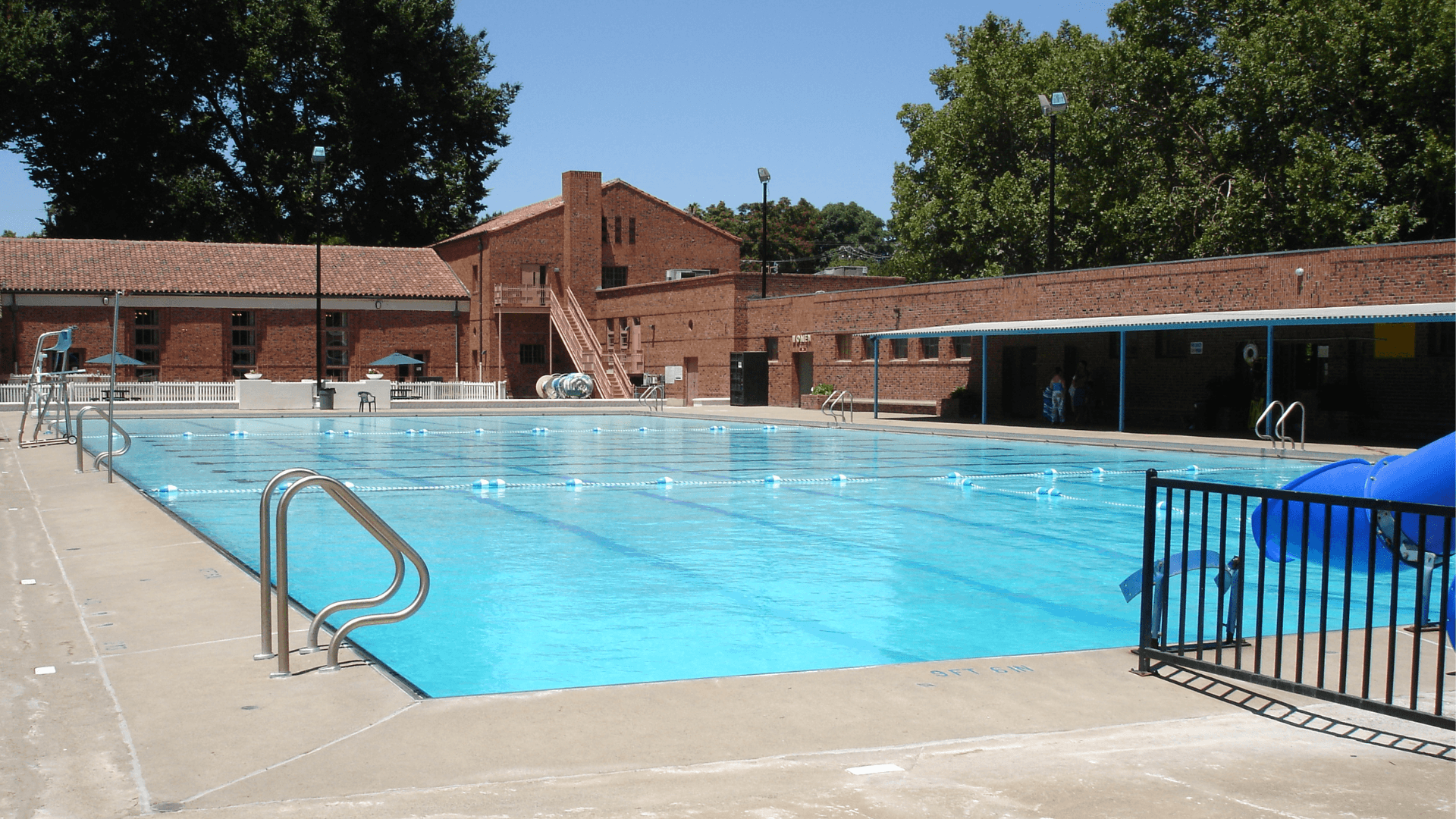
*In local government technical departments, the municipal swimming pool has long had a reputation for being a financial drain. Between energy costs, regulatory requirements, and routine maintenance, it’s hard to find a budget line item that doesn’t increase from one year to the next. And among all these expenses, there’s one that’s all too often overlooked: filtration.
Pressurized Equipment
A water park, aquatic center, or municipal pool is nothing like a private pool. The law requires continuous filtration, day and night, year-round, with regular water testing and quality standards that must be maintained at all times. There’s no break: the pool system runs even when it’s empty.
Added to this is the fact that visitor numbers can vary by as much as threefold between a January morning and a Saturday afternoon in July. Sunscreen, bodily residues, dust, organic matter: all of this ends up in the water and must be filtered out. A system sized for summer crowds runs idle the rest of the year, and conversely, an undersized system reaches its limits as soon as the first warm days arrive. The result: either we use more resources than necessary, or we compromise water quality.
And then there’s the simple matter of money. Local governments juggle dozens of needs every year, and a maintenance budget that keeps rising for no apparent reason will inevitably catch the attention of an elected official or a finance director. Sand to be changed, cartridges to be replaced, water lost during backwashing, hours of technical staff time required: the bill adds up quickly, and it’s often underestimated when drawing up the projected budget.
The True Hidden Cost of Traditional Filters
Take a sand filter, the most common solution in public pools. It gets the job done—no one disputes that. But each backwash flushes out between 2 and 5% of the pool’s total volume. For a medium-sized pool, that amounts to several dozen cubic meters of drinking water flushed down the drain every week—not to mention the energy used to heat that water, which will then need to be replaced.
Cartridge filters, on the other hand, promise finer filtration in a smaller space. In theory, that’s appealing. In practice, a municipality that has to replace its cartridges every week may find that this single expense exceeds ten thousand euros per year, not counting labor costs. And on top of that, there’s storage, ordering logistics, and the risk of running out of stock at the worst possible moment.
In short, the two most widely used technologies share one thing in common: they rely on consumables. And a consumable, by definition, is a recurring expense that never ends.
Another Approach: Filtering Without Wasting Anything
This is precisely the premise that Hectron set out to challenge. For over twenty years, the Nice-based company has been designing self-cleaning filters for industry, drinking water treatment, and municipal water systems, before adapting this technology for communal swimming pools.
The principle is easy to understand, even though it relies on cutting-edge technical expertise. A stainless-steel screen, with mesh that traps particles as small as 2 microns, replaces the sand or filter cartridge. When pressure rises due to clogging, a suction ramp activates and cleans the screen from the inside, without ever interrupting the pool’s filtration. Nothing to throw away, no cartridges to order: the stainless steel screen remains in place, cycle after cycle.
In practical terms, this means that pool operators no longer have to monitor a stock of consumables or schedule replacement work. Maintenance is limited to periodic inspections, which are far less time-consuming than traditional maintenance.
Which models for which pools?
For aquatic centers, Hectron primarily relies on its AG series, designed for high flow rates and professional use. Depending on the pool’s size and the flow rate to be treated, several models are available: the AG100 is suitable for smaller installations with a flow rate of up to 12 m³/h, while the AG200 and AG300 handle up to 45 and 120 m³/h, respectively. For larger facilities, such as a water park or a multi-pool aquatic center, the AG400 filter can handle up to 340 m³/h.
All these filters feature a stainless steel housing and are automatically controlled based on the pressure difference between the upstream and downstream sides of the filter. In other words, the cleaning cycle is triggered only when necessary—neither too early nor too late—which further limits the water consumption associated with the cleaning process itself to less than 1% of the filtered flow rate.
What This Means in Practice
A concrete example illustrates the scale of the change. At a campground in the Var region, replacing a sand filter with a Hectron system reduced the footprint of the equipment room from 15 to just 2 m², while maintaining a flow rate of 200 m³/h. In terms of water consumption, the difference is even more striking: from 10 m³ per day during peak season to just 1 m³, representing a 90% reduction.
For a local government, this kind of result translates directly into measurable savings: less drinking water purchased and heated, less waste to treat, fewer staff hours spent on maintenance, and a utility room that can be repurposed or freed up for other uses. The initial investment is higher than that of a conventional sand filter, it’s true, but the payback period is generally between two and four years, depending on the site’s configuration, after which the system generates pure net savings.
A choice for the long term
For managers of public swimming pools, the issue is no longer just technical; it is also political and budgetary. Reducing a recurring expense, lowering drinking water consumption amid resource constraints, and minimizing maintenance-related waste: these are arguments that resonate as much with technical departments as with elected officials concerned about their operating budgets.
Hectron, a French manufacturer based in Nice, has already equipped thousands of facilities in 64 countries, with clients ranging from major corporations like Veolia and Suez to swimming pool and campground operators. This experience, gained in sectors where reliability is non-negotiable, now finds a natural application in municipal aquatic centers, where every euro saved on operations is a euro that can be reinvested elsewhere.
For local governments considering a renovation of their mechanical room or simply looking to regain control over spiraling operating costs, consumable-free filtration is clearly worth a closer look.


