
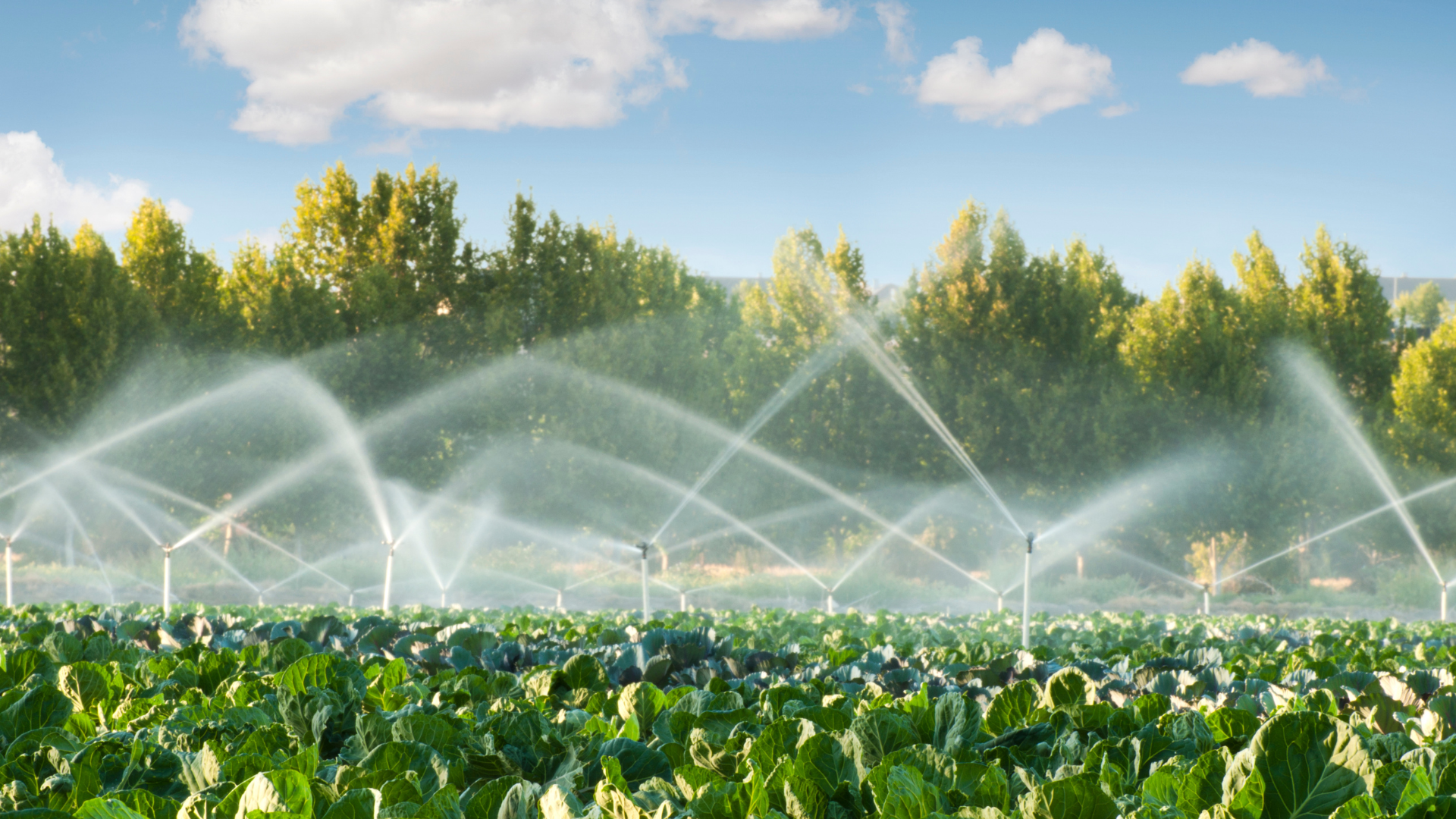
Modern agriculture is facing growing water management challenges. Between the scarcity of water resources and the need to optimize yields, irrigation and micro-irrigation systems have become key elements in agricultural productivity. Yet these sophisticated installations remain vulnerable to an invisible but formidable enemy: system fouling.
The problem of clogging: a silent scourge
Fouling of irrigation systems is one of the most worrying technical challenges facing farmers. This phenomenon manifests itself in the progressive accumulation of various particles in pipes, drippers and sprinklers, compromising the efficiency of the installation.
The sources of contamination are many and varied. Irrigation water, whether from boreholes, wells or surface sources, naturally carries suspended matter: fine sand, silt, clay, organic debris and sometimes even micro-organisms. These seemingly innocuous elements become problematic when they accumulate at sensitive points in the network.
Micro-irrigation, which is particularly sensitive to this phenomenon, uses drippers with very small orifices, generally between 0.5 and 2 millimetres in diameter. These small dimensions, necessary to ensure precise, water-efficient distribution, paradoxically represent major points of vulnerability. A particle as small as 100 microns, invisible to the naked eye, can be enough to partially obstruct a dripper and disrupt the uniformity of watering.
The many consequences of clogging
The impact of clogging goes far beyond a simple technical malfunction. It has repercussions at several levels, creating a domino effect that is particularly damaging to farming operations.
From an agronomic point of view, clogged drippers generate irrigation heterogeneity, with some areas under-irrigated and others over-irrigated. This water inequality directly affects crop growth, creating disparities in development within the plot itself. Deficit areas suffer from water stress, which limits yields, while surplus areas can suffer from root asphyxia or encourage the development of pathogens.
The economic aspect is not overlooked either. The reduced flow rate caused by clogging often forces farmers to increase irrigation times to compensate, resulting in higher water and energy consumption. Added to this is the cost of maintenance: manual cleaning of drippers, premature replacement of components, repeated technical interventions. Some studies estimate that clogging can reduce the efficiency of a micro-irrigation system by 20-30% in just one growing season.
Corrective maintenance also represents a considerable logistical challenge. The manual cleaning of thousands of drippers over several hectares is labor-intensive, and generates production interruptions that are particularly damaging during critical crop growth periods.
Changing needs due to climate change
Climate change is significantly accentuating this problem. Increasingly irregular rainfall is forcing farmers to diversify their water supplies, sometimes resorting to resources of lesser quality. Deep borehole water, for example, can contain high concentrations of iron and manganese, which precipitate on contact with oxygen, forming particularly tenacious deposits.
Prolonged periods of drought also concentrate suspended matter in surface water reserves, while intense rainfall events generate runoff loaded with terrigenous particles. This qualitative variability demands greater adaptability and robustness from filtration systems.
Hectron solutions: an innovative approach to automatic filtration
Faced with these challenges, Hectron’s automatic filters offer a technological response that is particularly well-suited to the constraints of modern irrigation. Developed since 2004, these systems revolutionize the traditional approach to filtration in agriculture.
The operating principle of Hectron filters is based on automatic cleaning, which eliminates the need for manual maintenance. Unlike traditional cartridge filters, which require regular changes of consumables, Hectron’s technology uses self-cleaning metal sieves with a service life extending over several years.
The filtration process takes place from the outside to the inside of the cylindrical screen. When particle accumulation causes a predefined pressure difference, the system automatically triggers a cleaning cycle. A rotating mechanism combined with localized suction removes retained impurities, evacuating them via an automatic purge without interrupting system operation.
Performance and reliability: the technical strengths of Hectron filters
Hectron’s professional range, particularly the AG series, offers remarkable versatility for agricultural applications. These filters can handle considerable flow rates, up to 340 m³/h, while maintaining filtration precision tailored to the demands of micro-irrigation. Filtration fineness, adjustable from 0.5 to 500 microns depending on the model, can be adapted to different types of water and applications.
One of the major advantages of this technology is the assurance of constant flow. Whereas conventional filters see their flow rate gradually decrease with clogging, Hectron filters maintain their hydraulic performance thanks to their self-cleaning system. This stability enables farmers to plan their irrigations with precision, without fear of drifting watering times or distribution heterogeneity.
Plant protection and economic optimization
Beyond simple filtration, Hectron systems provide comprehensive protection for irrigation systems. By eliminating upstream particles liable to damage equipment, they significantly extend the service life of pumps, valves, drippers and other sensitive network components.
This preventive protection translates into substantial savings. Maintenance costs are drastically reduced, while increased system reliability reduces the risk of breakdowns during critical periods. The absence of consumables also eliminates the recurring costs associated with filter cartridges, offering a particularly attractive return on investment.
The positive environmental impact is also worth highlighting. By eliminating the waste associated with used cartridges and optimizing water consumption through more efficient irrigation, Hectron filters are part of a sustainable development approach that is particularly valued in modern agriculture.
Conclusion: towards sustainable, high-performance irrigation
Fouling of irrigation networks represents a major technical challenge that farmers can no longer ignore. In the face of today’s climatic and economic challenges, the adoption of innovative filtration solutions is becoming a strategic necessity.
Hectron automatic filters, the fruit of twenty years of French innovation, offer a mature and proven technological response. Their ability to maintain a constant flow while effectively protecting installations makes them invaluable allies for high-performance, sustainable agriculture. By freeing operators from maintenance constraints and optimizing irrigation efficiency, these systems help reconcile agricultural productivity with responsible water resource management.


