
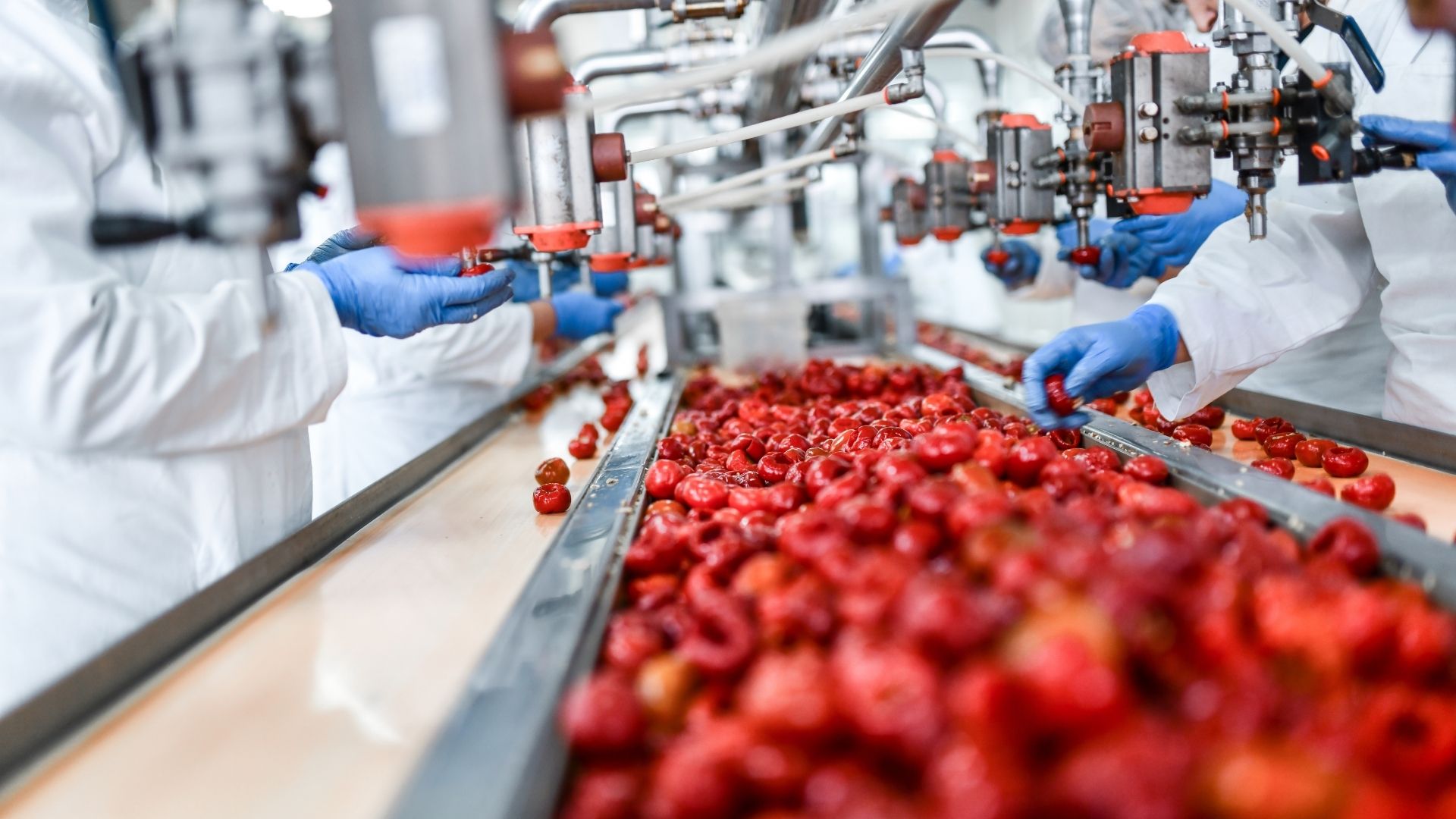
In a food processing plant, water is everywhere. It’s used to wash raw materials, clean production lines, cool equipment, and sometimes even as a direct ingredient in a product. Suffice it to say, we can’t afford to let just anything get into it. A little sand, metal particles from the piping, or organic residues coming up from a poorly maintained system—and an entire production line can be compromised, not to mention the health risks. That’s where automatic filtration comes into play—and it’s a field Hectron knows well.
Process water that tolerates nothing
Whether the water comes from a well, a river, or the public water supply, it always carries something: lime scale, fine particles, and sometimes microorganisms or debris that break off from the pipes themselves over time. For a food processing plant, this is no trivial matter. A clogged washing nozzle means a production line comes to a halt. A heat exchanger that becomes scaled due to suspended particles means energy efficiency plummets. And when water comes into direct contact with the product—such as in a soaking tank or a vegetable washing station—even the slightest impurity becomes a quality issue, or even a food safety concern.
Hectron’s self-cleaning filters, from the AS and AG series, were specifically designed to address these kinds of challenges. The principle has remained the same since the beginning: a filter screen that traps particles, an automatic cleaning system that removes them without human intervention, and therefore no cartridges to replace and no production downtime for maintenance. At a food processing facility, where production rates are often high and every interruption is costly, this consumable-free operation makes a real difference.
In dairies: protecting a sensitive product between each stage
Milk is a living, unpredictable product that tolerates no room for error. In a dairy, water is used at several stages: tank washing, cleaning in place (the well-known CIP), cooling the milk after collection, and supplying the cooling towers that support the thermal processes. Water laden with particles damages systems, promotes fouling of heat exchangers, and can, in the worst-case scenario, introduce contaminants into an environment that is supposed to remain pristine.
An automatic filter installed upstream of the process network ensures consistent water quality without pressure fluctuations, which is crucial when working with pasteurization or homogenization equipment calibrated to precise specifications.
Canning Plants: Continuous Washing Leaves No Room for Approximations
Canning plants often operate with substantial water flow rates, if only for washing fruits, vegetables, or fish before processing. Here, filtration serves a dual purpose: ensuring product cleanliness and protecting equipment that sometimes runs 24 hours a day during peak season.
This is exactly the type of environment found in Hectron’s client projects. At Fleury Michon in Chantonnay, the plant faced a common problem: the existing filters, with a cut-off size of 500 microns, were no longer sufficient to ensure satisfactory water quality at the effluent treatment plant’s outlet. The solution was to install an AG200 automatic filter, this time calibrated to 200 microns, which significantly improved filtration precision without complicating operations. This is a telling example of what the food industry expects from a filtration supplier: a precise technical solution tailored to a real-world need, not a generic solution applied to every situation.
Slaughterhouses: Clean Water Is a Top Health Priority
In a slaughterhouse, the issue of water is even more critical. Washing carcasses, cleaning cutting stations, and disinfecting floors and equipment—all of this depends on water whose quality must remain consistent, day after day, without fail. Cross-contamination caused by poorly filtered water can have immediate health consequences, and regulations in this sector are particularly strict.
Automatic filtration provides a simple yet effective solution here: it continuously removes particles that could accumulate in the pipes and serve as a breeding ground for bacterial growth, while ensuring stable pressure at the washing stations. As with other food-processing applications, the lack of heavy maintenance is a real advantage in an environment where teams are already focused on hygiene protocols.
A Customized Approach, Not a Standard Product
What stands out about the systems installed by Hectron is that there is no one-size-fits-all solution for the food industry. A flow rate of 50 m³/h at the wastewater treatment plant outlet is nothing like the requirements of a vegetable washing line or a dairy cooling system. The filtration fineness, operating pressure, and filter material (316L stainless steel is often the standard in this sector for hygiene reasons)—everything is tailored on a case-by-case basis, depending on the process and the quality of the incoming water.
With more than 6,000 projects completed and 30 years of experience in automatic filtration, Hectron supports food processing manufacturers in finding the right balance between sanitary requirements, industrial reliability, and operational simplicity. As we’ve seen, this is a subject that is never as simple as just installing a filter on a pipe.


